Wednesday, January 19, 2005

Carl Blair's Flora & Fauna: April 17- May 9, 2009

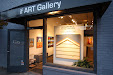
At its location on Lincoln Street, Columbia, SC, if ART Gallery presents Carl Blair’s Flora & Fauna, an exhibition of wooden animal sculptures and new paintings by Greenville artist Carl Blair. This will be the first Columbia exhibition by the veteran artist featuring sculpture. The exhibition also will be on view during Artista Vista 2009, April 23-25.

Carl Blair’s Flora & Fauna refers to the plant and animal life of Carl Blair’s mind, some of it of literal places and critters, other simply of Blair’s imagination. Nature always has been Carl Blair’s main visual inspiration – nature and the countryside in general. Some of his animal sculptures are representative, and all of them, fanciful. They are a reminder of Blair’s upbringing on a farm and of his insistence that as a youngster, he spent more time with animals than with human beings. To some extent, Blair regards his animal sculptures as self-portraits.

Nature typically is the basis of his heavily abstracted paintings, whether it’s the flatlands of the Midwest or the more mountainous terrain of the South Carolina Upstate. There, Blair lives on Paris Mountain, just outside of Greenville and near Paris Mountain State Park. He has lived there since the 1970s, when the place was still mostly undeveloped.

Kansas native and Greenville, S.C., resident Carl Blair in 2005 received South Carolina’s Elizabeth O’Neil Verner Governor’s Award for the Arts for Lifetime Achievement. He has been as an artist, administrator, educator and a driving force in South Carolina arts since in 1957, when he began teaching at Bob Jones University, from which he retired in 1998. He has shown in galleries and museums all along the East Coast as well as abroad. His prominence as a painter and sculptor has increased steadily and has been marked by several museum retrospectives since 1995. In 1999, he was included in “100 Years/100 Artists: Views of the 20th Century in South Carolina Arts,” the South Carolina State Museum’s look back at the 20th century.

Tuesday, January 18, 2005

if ART Artists Laura Spong and Paul Yanko at the Greenville (SC) County Museum of Art

GreenMachine, 2004
Oil on canvas
48 x 48 inches

if ART Gallery artists Laura Spong and Paul Yanko are represented in the current Greenville County Museum of Art exhibition Ideas Distanced From Objects, which is on view until July 27.

To see the Greenville County Museum of Art exhibition schedule, go here.

Included in the exhibition, which also includes works by Brian Rutenberg, Corrie McCallum and others, are Spong's painting Is It After Me Again? (2007, oil on canvas, 48 x 48 inches) and Yanko's GreenMachine (2004, oil on canvas, 48 x 48 inches).

The Greenville County Museum of Art acquired the Spong painting from if ART Gallery in August, 2007, and the Yanko painting, in July 2008. GreenMachine was previously shown in the December 2006 if ART exhibition Construction Crew II at Gallery 80808/Vista Studios, Columbia, S.C.

Is It After Me Again?, 2007
Oil on canvas
48 x 48 inches

Monday, January 17, 2005

Laura Spong: Still Screaming & Leo Twiggs: Targeted Man, February 5-17, 2009


For its February 2009 exhibition, if ART presents Gallery 80808/Vista Studios in Columbia, S.C., two solo exhibitions by some of South Carolina most prominent veteran artists, Columbia’s Laura Spong and Orangeburg’s Leo Twiggs.

Both artists will present new work. Spong will show her trademark Abstract Expressionist oil paintings. Twiggs will exhibit a new series of batik paintings around the theme of “targeted man,” featuring figures adorned with a bull’s eye or target.

Laura Spong (b. 1926) is among South Carolina’s most prominent non-objective painters. In the past three years, Spong has further increased her reputation with several solo exhibitions, including a retrospective at the University of South Carolina’s McMaster Gallery. For her 2006 exhibition, Laura Spong at 80, Columbia’s if ART published a 32-page catalogue. In addition to the S.C. State Art Collection, Spong’s work was purchased recently by the Greenville (S.C.) County Museum of Art and the S.C. State Museum. Three of her paintings also are in the Contemporary Carolina Collection, which was established in 2008 at the Medical University of South Carolina’s Ashley River Tower in Charleston. Spong maintains a studio at Vista Studios in Columbia.

Leo Twiggs (b. 1934) is a native of St. Stephen, S.C., who lives in Orangeburg, S.C., where he taught art at South Carolina State University from 1964 until 1998 and established a museum. Twiggs is widely seen as one of the most important South Carolina artists since the 1960s. His career retrospective, Myths and Metaphors: The Art Of Leo Twiggs, organized by the Georgia Museum of Art and accompanied by a catalogue, completed a two-year tour at the South Carolina State Museum in Columbia in April 2006. Twiggs has had dozens of solo exhibitions in museums and galleries in the Southeast and beyond, including the Studio Museum in Harlem. In 1964, he received a graduate degree in art from New York University and in 1970 was the first African American to receive an Ed.D. in art education from the University of Georgia. In 1981, he was the first to receive as an individual South Carolina’s highest art award, the Elizabeth O’Neil Verner Governor’s Award for the Arts.

Sunday, January 16, 2005

The Salon III: January 15- February 4, 2009


For its January 2009 exhibition, if ART Gallery presents Salon III, an exhibition of prints by gallery artists at if ART Gallery, 1223 Lincoln St., Columbia, S.C. The opening reception will be Thursday, January 15, 2009, 5 – 10 p.m. The exhibition will be installed salon-style at the gallery’s first floor and continues if ART’s salon-style exhibitions; in December 2008, Salon I & II took place simultaneously at the gallery and Gallery 80808/Vista Studios in Columbia.

Among the printmaking techniques represented in the exhibition are etchings, dry points, lithographs, woodcuts, linocuts, photopolymer prints, embossings, monotypes, silkscreens and photo transfers.

During the exhibition, gallery artists Steven Chapp of Easley, S.C., Phil Garrett of Greenville, S.C., Brown Thornton of Aiken, S.C., and Marcelo Novo of Columbia will give demonstrations of various printmaking techniques. For times and demonstrated techniques, see above.

Artists in the exhibition include Karel Appel, Jeri Burdick, Carl Blair, Lynn Chadwick, Steven Chapp, Corneille, Jeff Donovan, Jacques Doucet, Phil Garrett, Herbert Gentry, Tonya Gregg, John Hultberg, Richard Hunt, Sjaak Korsten, Lucebert, Reiner Mährlein, Sam Middleton, Eric Miller, Joan Mitchell, Dorothy Netherland, Marcelo Novo, Hannes Postma, Edward Rice, Anton Rooskens, Kees Salentijn, Laura Spong, Brown Thornton, Bram van Velde, Katie Walker, David Yaghjian and Paul Yanko.

Saturday, January 15, 2005

if ARTwalk: Salon I & II: December 11- 24, 2008


For its December 2008 exhibition, if ART Gallery presents The Salon I & II, an exhibition at two Columbia, SC, locations: if ART Gallery and Gallery 80808/Vista Studios. On Thursday, December 11, 2008, 5 – 10 p.m., if ART will hold opening receptions at both locations. The ifART Walk will be on Lady and Lincoln Streets, between both locations, which are around the corner from each other.

The exhibitions will present art by if ART Gallery artists, installed salon-style at both Gallery 80808 and if ART. Artists in the exhibitions include two new additions to if ART Gallery, Columbia ceramic artist Renee Rouillier and the prominent African-American collage and mixed-media artist Sam Middleton, an 81-year-old expatriate who has lived in the Netherlands since the early 1960s.

Other artists in the exhibition include Karel Appel, Aaron Baldwin, Jeri Burdick, Carl Blair, Lynn Chadwick, Steven Chapp, Stephen Chesley, Corneille, Jeff Donovan, Jacques Doucet, Phil Garrett, Herbert Gentry, Tonya Gregg, Jerry Harris, Bill Jackson, Sjaak Korsten, Peter Lenzo, Sam Middleton, Eric Miller, Dorothy Netherland, Marcelo Novo, Matt Overend, Anna Redwine, Paul Reed, Edward Rice, Silvia Rudolf, Kees Salentijn, Laura Spong, Tom Stanley, Christine Tedesco, Brown Thornton, Leo Twiggs, Bram van Velde, Katie Walker, Mike Williams, David Yaghjian, Paul Yanko and Don Zurlo.

Friday, January 14, 2005

Meet Phil Garrett & See His New Horse Paintings: July 14, 2009


At its location at 1223 Lincoln Street, Columbia, SC, if ART Gallery presents an evening with Greenville, S.C., painter and printmaker Phil Garrett. The gallery will be showing a new body of Garrett’s paintings and monotypes of horses. The horse image is and has been for decades among Garrett’s best-known and most successful motifs. Garrett will be present on Tuesday, July 14, at the gallery from 6 – 9 p.m.

Phil Garrett (b. 1948) is among his native South Carolina’s most prominent artists. In addition to his paintings, he is known as a printmaker. Garrett studied printmaking at the Honolulu Academy and received a BFA from the San Francisco Art Institute, where in the 1970s he also did post-graduate studies in print making. From the mid-1980s through the early 1990s he worked with Tamarind Master Printer Cappy Kuhn at her print studio, Winstone Press, in Mocksville, N.C. In 1998, Garrett founded King Snake Press in Greenville, S.C., where he has produced monotypes with dozens of artists. He is represented in the S.C. State Art Collection and has exhibited at the Greenville County (S.C.) Museum of Art, the Asheville (N.C.) Museum of Art, the Print Club of Philadelphia and in many commercial and institutional galleries. Garrett’s prints and paintings are in several public and private collections in Europe, Japan and the United States.

Thursday, January 13, 2005

Edward Rice Paintings, 1996-2008: November 6- December 6, 2008


At its location on Lincoln Street, Columbia, SC, if ART Gallery next month will present North Augusta painter Edward Rice’s first solo exhibition in Columbia since 1992. With the exhibition, if ART Gallery will publish a 40-page, full-color catalogue with essays by Richard Gruber, director of New Orleans’ Ogden Museum of Southern Art, and if ART owner Wim Roefs.

The exhibition will provide an overview of Rice’s paintings since 1996 and include Rice’s first strictly non-objective, minimalist paintings, Dublin I, II, III, all of 2008. In addition, the show will contain architectural, landscape and botanical paintings, some done recently in Ireland.

The exhibition runs from Nov. 6– Dec. 6, 2008. The artist’s reception is Thursday, Nov. 6, from 5:00 – 10:00 p.m. The exhibition will be at if ART Gallery, 1223 Lincoln St., Columbia, SC.

Edward Rice (b. 1953) has his studio in his hometown of North Augusta, SC, and lives in Augusta, Ga. He is one of the Southeast’s most prominent contemporary painters. Among the museums that have his work in their collections are the Ogden Museum of Southern Art in New Orleans; the Georgia Museum of Art in Athens; the Morris Museum of Art in Augusta; the Columbia Museum of Art, McKissick Museum and South Carolina State Museum, all in Columbia; the Greenville County Museum of Art in Greenville, SC; and the Gibbes Museum of Art in Charleston, SC.

Rice has had solo museum exhibitions at the Morris Museum, the Gibbes Museum of Art, the Greenville County Museum of Art, the Chattahoochee Valley Art Museum in La Grange, Ga., the McKissick Museum and the Ogden Museum. Rice also was represented in The Story of the South: Art and Culture, 1890 – 2003, the inaugural exhibition at the Ogden Museum of Southern Art in New Orleans. He was included in 100 Years/100 Artists: Views of the 20th Century in South Carolina Art at the South Carolina State Museum in Columbia, a survey of 20th-century art in the state. “Edward Rice: Architectural Works, 1978-1998” was published by the Gertrude Herbert Institute of Art in Augusta, and “Edward Rice: Recent Monotypes,” by the Morris Museum of Art in 2003.

Wednesday, January 12, 2005

The Line According To: August 29- September 9, 2008


For its August – September exhibition, if ART presents at Gallery 80808/Vista Studios The Line According to Roland Albert, Mary Gilkerson, Sjaak Korsten & Kees Salentijn. German artist Albert will present mixed media, mostly wood-based sculptures, and Columbia’s Gilkerson, a new series of monotypes. Dutch painter Salentijn will show paintings, mixed media works on paper, painted ceramic plates, lithographs and silkscreens. Korsten, another Dutch artist, will show mixed media works on paper. Korsten has recently joined if ART Gallery, and the upcoming exhibition will be his first in the United States.

Albert (b. 1944) is a widely respected painter and sculptor in Germany. He is part of the artists’ exchange between Columbia and its German sister city of Kaiserslautern. Albert studied with the famous Greek-American sculptor Kosta Alex in Paris in 1964. In 1970, he graduated from the prestigious Munich Academy of Fine Arts. Albert’s work overall fits European post-World War II contemporary traditions. He shares Joseph Beuys’ love for rough and unfinished materials. Like Art Informel artists such as Spaniard Antoni Tapies and fellow German Emil Schumacher, Albert considers not just forms and shapes important but also the tactile and physical quality of his materials.

Gilkerson (b. 1958) has recently completed monotypes for her Three River series based on Columbia’s Congaree, Saluda and Broad rivers. The sometimes strongly abstracted works are based on photos and drawings Gilkerson made earlier this year during walks along the riverbanks. Gilkerson for many years has been prominent on the art scene of the South Carolina Midlands as an artist, critic and curator. She teaches art at Columbia College in her hometown of Columbia. Gilkerson holds BFA, MA and MFA degrees from the University of South Carolina.

Korsten (b. 1957) is widely known and respected in the Netherlands. Not unlike Albert, he works in established post-World War II European modern and contemporary traditions. His work is related to Art Informel artists such as Tapies, Jaap Wagemaker, Wols, Jean Fautrier and Manalo Millares. Much of the focus in their work and that of Korsten is on materials and surface. While Korsten’s work is heavily abstracted, he typically includes representative elements. Korsten’s work has been shown at major European fairs, including TEFAF Maastricht, PAN Amsterdam and the Cologne Art Fair.

Salentijn (b. 1947) is among The Netherlands’ most prominent painters. The initial inspiration leading to his mature style came from post-war American art and from Spanish painters such as Tapies, Antonio Saura, and later Millares. Salentijn developed a personal style that combined the expressionist, painterly swath with smaller but equally expressionist marks that are quick and slightly nervous but sure. Combining vigorous painting with often-childlike imagery, Salentijn’s work eventually placed him in the Northern European, post-war CoBrA tradition of strongly expressionist, abstracted art that containes representational elements. Salentijn’s increased use of figuration in the 1990s confirmed this link. His work is in several European museums. In addition to the 1982 Chicago Art Fair, his work has been represented at major European art fairs, including Art Fair Basel, TEFAF Maastricht, Kunstmesse Cologne and KunstRAI Amsterdam.

Marcelo Novo: Buenos Aires/Columbia, SC: April 17- May 7, 2008


The upcoming exhibition at if ART Gallery, Marcelo Novo: Buenos Aires/Columbia, SC, 1985–1994, opens to the public on Friday, April 18. It will run through May 7, 2008. The exhibition will present early work by Argentine artist Marcelo Novo, a native of Buenos Aires who has lived in Columbia since 1992. Novo (b. 1963) will show paintings and prints, including monotypes, etchings, drypoints, lithos and prints combining several techniques.

Novo has been in dozens of exhibitions across the country and abroad, including at New York City’s Cinque Gallery, the Deland Museum of Art in Deland, Fla., and Buenos Aires’ Centro Cultural Recoleta. Novo’s 10-year retrospective was at the Sumter (S.C.) Gallery of Art in 2003. In 2004-2005, Novo developed with choreographer Miriam Barbosa the ballet “Catharsis,” performed by the University of South Carolina Dance Company. Novo was the curator for “Accessibility 2005: Transplanted,” an installation art project in Sumter, featuring six Latin American artists living in the United States.

Tuesday, January 11, 2005

Abstracted in Nature: March 21-April 1, 2008


For its March exhibition, if ART presents at Gallery 80808/Vista Studios Abstracted In Nature, featuring Columbia artist Laura Spong and German artists Reiner Mährlein and Silvia Rudolf. Spong will present a new series of her non-objective paintings. The work includes Good Report, Bad Report, No Report, a 2007 composite painting of 100 x 80 inches, consisting of 25 paintings of 20 x 16 inches each, arranged in a five-by-five grid. Rudolf will show non-objective and abstracted, figurative paintings and drawings. Mährlein will show large and small metal-and-granite sculptures as well as one-of-a-kind rust prints and embossings.

Mährlein (German, b. 1959) is a widely acclaimed artist in the German state of Rhineland-Palatinate. He is part of a regular exchange between artists from Columbia and its German sister city, Kaiserslautern. Mährlein studied art in Nuremberg and at the prestigious Ecole Nationale Superieur de Beaux-Arts in Paris. He has created large, public sculptures throughout his home region and has exhibited widely throughout Europe. The medium for both of Mährlein’s art forms is granite and steel. Mährlein creates the prints by pressing rusty steel plates against paper and paper against granite surfaces. This results in abstract works with a rich and rough, three-dimensional and architectural feel.

Rudolf (German, b. 1957), who received her art education in Kaiserslautern, lived in Argentina between 1994 and 2000. There, she founded the artist group “transit.” In the past two years, she has lived in New York. Her work has been in solo and group exhibitions in Germany, the United States, Argentina and several other European and Latin American countries. Group shows include the first Biennale of Modern Art at the Museo de las Bellas Artes, Buenos Aires, Argentina. Her solo shows include one at the Museos de la Ciudad de Buenos Aires.

Columbia, S.C., artist Laura Spong (b. 1926) is among South Carolina’s most prominent non-objective painters. In the past two years, Spong has further increased her reputation with four solo exhibitions, including a retrospective at the University of South Carolina’s McMaster Gallery. For her 2006 exhibition, Laura Spong at 80, Columbia’s if ART published a 32-page catalogue. In addition to the S.C. State Art Collection, Spong’s work was purchased recently by the Greenville (S.C.) County Museum of Art and the S.C. State Museum. Three of her paintings also are in the Contemporary Carolina Collection, which was established in 2008 at the Medical University of South Carolina’s Ashley River Tower in Charleston.

Monday, January 10, 2005

The Inventory: February 15-26, 2008


For its February exhibition, if ART presents The Inventory, a group exhibition of artists from if ART Gallery. The show will consist of many new works by if ART artists as well as older pieces from the gallery’s inventory.

Included in the show will be work by Columbia artists Jeff Donovan, Mary Gilkerson, Marcelo Novo, Anna Redwine and David Yaghjian. Other South Carolina artists include Carl Blair, Jeri Burdick, Phil Garrett, Bill Jackson, Peter Lenzo, Dorothy Netherland, Matt Overend, Edward Rice, Tom Stanley, Christine Tedesco, H. Brown Thornton, Leo Twiggs, Katie Walker and Paul Yanko. Furthermore, the show will present work by former South Carolina residents Tonya Gregg, Eric Miller and Andy Moon. Also included are California collage artist Jerry Harris, Dutch painter Kees Salentijn and German artists Roland Albert, Klaus Hartmann and Silvia Rudolf.

Sunday, January 9, 2005

Construction Crew III: December 7-18, 2007


For its holiday exhibition at Gallery 80808/Vista Studios in Columbia, S.C., if ART presents Construction Crew III, a group exhibition with work by South Carolina artists Steven Chapp, Jeff Donovan, Janet Orselli and Edward Rice. Like the first two if ART Construction Crew exhibitions in December 2005 and 2006, the show consists of two-dimensional and three-dimensional art that has strong constructional or architectural characteristics. The exhibition opens Friday, Dec. 7, with a reception from 5 –10 p.m. and runs through Dec. 18. Opening hours are weekdays, 11 a.m. – 7 p.m., Saturdays, 11 a.m. – 5 p.m., and Sundays 1 – 5 p.m. Chapp, Donovan, Orselli and Rice are represented by if ART Gallery, 1223 Lincoln St., (803) 238-2351, where additional works of art by all four artists will be on view.

Chapp will be showing monotypes, intaglio prints, drawings and paintings from the 1980s through last week. Donovan will present several major new ceramic sculptures. Orselli will show reconstructed and reconfigured old baby-carriages-turned-art-objects. Among the paintings Rice will be showing is a new series of barn paintings, in which the same barn structure is painted a dozen times in different colors.

Easley, S.C., native Steven Chapp (b. 1952) is a native of Kansas City, MO. He holds an MFA in printmaking and drawing from Clemson University and a BFA from Appalachian State University. He has shown in galleries and museums throughout the region, including the Greenville County (S.C.) Museum of Art, the Burroughs and Chapin Museum in Myrtle Beach, S.C. and the Pickens County (S.C.) Museum of Art and History. He worked on two projects with artists Christo and Jean Claude, in Kansas City in 1978 and Key Biscayne, Fla., in 1983.

Jeff Donovan (b. 1957) has been a fixture on the Columbia, S.C., art scene for many years. The painter and ceramic sculptor was born in Millford, Del., and studied at the Ringling School of Art in Sarasota, Fla., and the Penland School of Crafts in Penland, N.C. Donovan has exhibited widely throughout South and North Carolina. He is represented in the Mark B. Coplan Collection of South Carolina Art, the prominent ceramic sculpture collection of Ron Porter and Joe Price in Columbia and in the collection of Blue Cross Blue Shield of South Carolina. Donovan also works as an art conservator with ReNewell Fine Art Conservation in Columbia.

Janet Orselli (b. 1954) was born in Columbia, S.C., where she lived until November 2007, when she moved to Mill Spring, N.C. In 1976, she graduated from Clemson Unversity with a degree in psychology. In the 1990s she gradually switched careers from the field of mental health to art. While establishing herself as an artist, she earned an M.F.A. from Clemson in 2001. She was selected for the 2001 and 2004 South Carolina Triennial exhibitions as well as the 2004 traveling exhibition “South Carolina Birds: A Fine Arts Exhibition.” Earlier this year, Orselli has a solo show at O.K. Harris Gallery in New York City. Orselli has done large installations at the Gibbes Museum in Charleston, S.C., the Burroughs & Chapin Museum in Myrtle Beach, S.C., and Appalachian State University in Boone, N.C. Orselli has received several residencies and fellowships, including at Anderson Ranch in Colorado and in Kaiserslautern, Germany. She is the recipient of a Pollock-Krasner Fellowship.

North Augusta, S.C., native Edward Rice (b. 1953) lives in Augusta, Ga. He is one of the Southeast’s most prominent contemporary painters. Rice’s solo exhibitions include those at the Morris Museum of Art in Augusta, the Gibbes Museum of Art in Charleston, S.C., the Greenville County (S.C.) Museum of Art, the Chattahoochee Valley Art Museum in La Grange, Ga., and the McKissick Museum at the University of South Carolina in Columbia, S.C. Rice also was represented in The Story of the South: Art and Culture, 1890 – 2003, the inaugural exhibition at the Ogden Museum of Southern Art in New Orleans. “Edward Rice: Architectural Works, 1978-1998” was published by the Gertrude Herbert Institute of Art in Augusta, Ga., and “Edward Rice: Recent Monotypes,” by the Morris Museum of Art in 2003.

Saturday, January 8, 2005

Carl Blair & Anna Redwine: Old and New: October 12-23, 2007


From October 12 – 23, if ART will present at Gallery 80808/Vista Studios two solo exhibitions: Carl Blair, Old & New, and Anna Redwine: New. The exhibition opens October 12 with a reception from 5:00 – 10:00 p.m. Opening hours for Gallery 80808/Vista Studios will be expanded during the if ART exhibition. They will be weekdays, 11 a.m. – 7 p.m.; Sat., 11 a.m. – 5 p.m.; Sun, 1 – 5 p.m. Gallery 80808/Vista Studios is located at 808 Lady St., Columbia.

Carl Blair, of Greenville, will present oil and acrylic paintings on canvas and paper, gouaches, monotypes and etchings from the early 1970s through 2006. Most of the work suggests the landscape and is executed in an abstracted, lively, colorful, expressionist manner. Anna Redwine of Columbia will show vivid and energetic graphite drawings, on gessoed panels, of insects and other animals. Redwine produced the work earlier this year during a residency at Paris Mountain State Park near Greenville. Blair, too, created most of his work at Paris Mountain, where he lives.

Kansas native Blair (b. 1932) in 2005 received the Elizabeth O’Neil Verner Governor’s Award for the Arts for Lifetime Achievement. He has been as an artist, administrator and educator a driving force in South Carolina arts since he appeared on the scene in 1957. His prominence as a painter and sculptor has increased steadily and has been marked by several museum retrospectives since 1995. In 1999, he was included in “100 Years/100 Artists: Views of the 20th Century in South Carolina Arts,” the South Carolina State Museum’s look back at the 20th century. Blair in 1998 retired from teaching at Bob Jones University in Greenville, where he taught for four decades.

Anna Redwine (b. 1978), a native of New Orleans, in 2000 received a BA in English from the University of Mississippi. In 2006, she received her MFA at the University of South Carolina art department. Her April 2006 masters’ thesis show, Life In One Breath, was at Gallery 80808/Vista Studios, organized by if ART.

Friday, January 7, 2005

The Fame Factor: September 7-18, 2007


In September, work by world-famous artists such as Joan Mitchell, Karel Appel, Lynn Chadwick, Wilfredo Lam and Bram van Velde will be in The Fame Factor, a group show at Gallery 80808/Vista Studios in Columbia organized by if ART Gallery. The exhibition also will include if ART Gallery artists Leo Twiggs, Edward Rice, Kees Salentijn,Virginia Scotchie, Laura Spong and Paul Reed. The Fame Factor will explore the concept of fame, especially the relativity of fame.

The exhibition opens September 7 with a reception from 5:00 – 10:00 p.m. and runs through September 18. Opening hours for Gallery 80808/Vista Studios will be expanded during the if ART exhibition. They will be weekdays, 11:00 a.m. – 7:00 p.m.; Sat., 11:00 a.m. – 5:00 p.m.; Sun, 1:00 – 5:00 p.m.

Other American artists with national and even international reputations in the show are Richard Hunt, Benny Andrews, Ibram Lassaw, Paul Reed, John Hultberg and Sam Middleton, an American artist who has lived in the Netherlands since the early 1960s. Dutch artists with international fame in addition to Appel and Van Velde will be Corneille, Ger Lataster, Hannes Postma, Kees Salentijn and Lucebert. Furthermore, the show will present French artist Jacques Doucet and Belgian artist Reinhoud.

Reinhoud and Doucet both were part of the legendary CoBrA group of Northern European artists from the late 1940s and 1950s, which also included Appel, Corneille and Lucebert. “CoBrA” stands for Copenhagen, Brussels and Amsterdam, the cities or origin of most of the major figures in the group. Another artist in the show, Wilfredo Lam, a Cuban artist who had a vast international reach, exhibited once with CoBrA, in the early 1950s, though he was not a member. All of these artists are in the collections of major American museums. Dutchman Salentijn works in a post-CoBrA style.

Hunt, Lassaw, Chadwick and Reinhoud are sculptors. All will be represented in the exhibition with limited-edition lithographs. Hunt, from Chicago, is one of the country’s most famous living sculptors, in part for his many public sculptures. Lassaw was one of the main sculptors in the New York School and a core figure on the city’s 1940s-1950s Abstract Expressionist scene. Chadwick is one of the most prominent figures among British sculptors of the generation of Henry Moore and Barbara Hepworth.

Sam Middleton, born in Harlem, NY, but living in the Netherlands, is known for his collages inspired by jazz; the exhibition will show some of his silkscreens. Lataster is one of the Netherlands’ most prominent Abstract-Expressionist painters; his work is in several major American museums. Postma established a big reputation in Europe in the 1960s with his etchings and aquatints, some of which will be in the show. Bram van Velde, who spent most of life and career in Paris, is a legendary figure among mid-20th-century European abstractionists.

Hultberg was part of the New York School scene but subsequently moved to California. Andrews was from Georgia but built his career in New York City, becoming one of the country’s most prominent African-American artists, who increasingly gained traction in the wider art community. Reed was with Kenneth Noland, Morris Louis and Gene Davis among the original Washington Color Field painters of the 1960s. Mitchell is simply one of the most famous Abstract-Expressionist painters.

Twiggs, from Orangeburg, S.C., most likely is the country’s most prominent pioneer with batik as a contemporary art medium. Scotchie is a ceramist with an international reputation who teaches at the University of South Carolina. Rice, from North Augusta, S.C., is represented in many museums in the Southeast. Spong’s reputation has grown by leaps in recent years and is now among South Carolina’s best-known abstract painters.

“The idea of the show is to explore how relative fame is,” if ART Wim Roefs said. “Several feet worth of books and catalogues on Appel, and a few feet on Mitchell, don’t change the fact that among people attending this show, Laura Spong is probably better known – and she makes do with a single 32-page catalogue. Leo Twiggs also is better known here than Appel and Mitchell. Someone like Van Velde is legendary in Europe. Though he had New York gallery shows in the United States, and though his work is in many major American museums, he is at best obscure around here. In general, of course, a lot of famous European artists aren’t well-known in the United States.”

“Lassaw really was one of the major sculptors among Abstract Expressionists, but, of course, sculptors, except for David Smith, played third fiddle in the movement compared to the painters. Reed was one of six artists in the first nationally traveling exhibition of Washington Color Field painters, with Kenneth Noland and Morris Louis, and he makes the art-history books. Still, he’s mainly known among art insiders, though the renewed recent appreciation of color-field painting has giving him new exposure, too.”

Thursday, January 6, 2005

Laura Spong: The Early Years: August 21- September 8, 2007


The Greenville County (S.C.) Museum of Art has acquired Columbia artist Laura Spong’s 2007 painting Is It After Me? The painting is oil on canvas and measures 48 x 58 inches. The painting was included in the recent Greenville Museum exhibition Studio Visits and was featured on the cover of the museum’s June membership newsletter. The purchase went through if ART Gallery in Columbia, which represents Spong (b. 1926).

The Greenville Museum purchase follows last year’s acquisition of two Spong paintings by the South Carolina State Art Collection, which purchased Spong’s late-1950s painting White Flowers and Dancing Under The Street Light of 2003.

Meanwhile, if ART Gallery is showing Laura Spong: The Early Works. The exhibition, which runs through September 8, consists mainly of paintings by Spong from the 1950s and 1960s. Attached is an essay by if ART owner Wim Roefs with more information about Spong and her work from that period.

In September, Spong will be in The Fame Factor, a group show at Gallery 80808/Vista Studios in Columbia organized by if ART Gallery. The exhibition will explore the concept of fame, especially the relativity of fame. The show will include limited edition prints by world famous artists, including lithographs by Joan Mitchell, Karel Appel, Lynn Chadwick, Wilfredo Lam and Bram van Velde.

In addition to Spong, the exhibition – which opens on September 7 and runs through September 18–also will include South Carolinians Leo Twiggs, Edward Rice and Virginia Scotchie. Other American artists in the show are Richard Hunt, Benny Andrews, Ibram Lassaw, Paul Reed, John Hultberg and Sam Middleton, an American artist who has lived in the Netherlands since the early 1960s. Dutch artists in addition to Appel will be Corneille, Ger Lataster, Hannes Postma, Kees Salentijn and Lucebert. Furthermore, the show will present French artist Jacques Doucet and Belgian artist Reinhoud.

Several paintings in the current Spong exhibition of early works at if ART Gallery were included in the Greenville Museum’s Studio Visits exhibition, which ran from April 18 – June 10. The Greenville exhibition also included if ART Gallery artists David Yaghjian of Columbia and Dorothy Netherland of Charleston, S.C., as well as David Boatwright of Charleston and Alexia Timberlake and Jay Owens, both of Greenville.

In addition to her 80th-birthday exhibition in February 2006, Spong had three solo exhibitions last year, including one at Hampton III Gallery in Greenville and a retrospective at the University of South Carolina’s McMaster Gallery. Spong also was in a two-person show at the Vinson Gallery in Atlanta. In February of this year, Spong was with Katie Walker, Paul Reed and Mike Williams in a group show at Columbia’s Gallery 80808/Vista Studios, organized by if ART Gallery. Next month, Spong’s work will be in a group show at Elder Art in Charlotte, N.C., and in October, she will have a solo exhibition at Francis Marion University.

Wednesday, January 5, 2005

David & Edmund Yaghjian: April 20- May 21, 2007


For its first exhibition at if ART Gallery in Columbia, S.C., if ART, International Fine Art Services, presents an exhibition of works on paper by father-son duo Edmund and David Yaghjian. The show will run from April 20 – May 12, 2007. The exhibition will be part of Artista Vista, April 26 & 28, and the Columbia Festival of the Arts, April 26 – May 6.

Armenia native and longtime Columbia resident Edmund Yaghjian (1905-1997), whose retrospective is at the S.C. State Museum in Columbia until September 16, will be represented by gouaches, water colors, lithographs, drawings and studies. Yaghjian was the first chairman of the University of South Carolina art department and instrumental in establishing the Columbia Museum of Art, the Guild of S.C. Artists, and the Columbia Artists’ Guild. The older Yaghjian’s works in the if ART show are from the collections of his children.

Columbia native and resident David Yaghjian (b. 1948) will show monotypes produced in March at Phil Garrett’s King Snake Press in Greenville, S.C. Yaghjian focuses not on his well-known architectural themes but on his more recent body of art with an existential bent, involving a middle-aged man and his dog, wife, snake, belly and tribulations. The younger Yaghjian returned to Columbia from Atlanta in 2000.

The gallery, if ART Gallery, opened in November 2006. While if ART has been organizing exhibitions at Vista Studios/Gallery 80808 in Columbia for two years, the Yaghjian show will be its first exhibition at if ART Gallery.

Tuesday, January 4, 2005

Deanna Leamon & H. Brown Thornton: March 9-20, 2007


For its March exhibition at Gallery 80808/Vista Studios in Columbia, S.C., if ART, International Fine Art Services, presents solo exhibitions by Deanna Leamon and H. Brown Thornton. Leamon will exhibit mixed media works on paper. Thornton will show mixed media paintings. Both artists are represented by Columbia’s if ART Gallery, 1223 Lincoln St., (803) 238-2351.

Leamon is a professor at the University of South Carolina art department. Her graphite-driven works on paper have received great critical acclaim. Leamon only sporadically shows in Columbia, and this show will be her first local solo exhibition in a commercial gallery. Leamon’s work was in “Thresholds: Expressions of Art & Spiritual Life.” The exhibition was curated by New York art critic Eleanor Heartney and traveled throughout the Southeast from 2004–2006. Leamon also was in “The Felt Moment,” a 2003 show of contemporary art from the Carolinas at the Columbia Museum of Art.

Aiken native and resident Brown Thornton also was in “The Felt Moment.” Thornton received his BFA from the University of South Carolina art department in 1999. From 2001–2005 he lived and worked in Chicago, where he shows with the Linda Warren Gallery. The realization that the South was a significant aspect of his work – and the fear of another cold Chicago winter – made Thornton decide to move back to Aiken, where he lives and works in a warehouse studio.

“I want my work to constantly emphasize the temporal, passing moment,” Thornton says of his abstract acrylic paintings with representative elements. “This can be something that just happened or something that happened long ago and only remains as fragments made up of memories or photographs. I think I am defined more so by a collection of constantly passing events, both present and past, than most anything else. I often place the whale skeletons on dry land, emphasizing that this land was not dry at one point and may one day be under water again.”

The impetus for Leamon’s current work is the war in Iraq, she says, “especially those aspects of that war that our government doesn’t want us to see, such as Iraqi casualties. This work continues my concern with individual human suffering as a consequence of large bureaucratic exercises of power. I continue to explore new ways to extend drawing and to make the drawing medium serve the artistic message.”

Monday, January 3, 2005

Abstract in Nature: February 9-20, 2007


For its February exhibition at Gallery 80808/Vista Studios in Columbia, S.C., if ART, International Fine Art Services, presents Abstract In Nature, a group exhibition with work by South Carolina artists Laura Spong, Mike Williams and Katie Walker as well as renowned first-generation Washington Color Field painter Paul Reed. The show consists of abstract paintings by Reed, Spong and Walker and abstract metal sculpture by Williams. The exhibition opens Friday, Feb. 9, with a reception from 5:00 –10:00 p.m. and runs through Feb. 20. Opening hours are weekdays, 11:00 a.m. – 7:00 p.m., Saturdays, 11 a.m. – 5:00 p.m., and Sundays 1:00 ¬ – 5:00 p.m. Reed, Spong and Walker are represented by Columbia’s if ART Gallery, 1223 Lincoln St., (803) 238-2351, which also shows sculpture by Williams.

Washington, D.C., native Paul Reed, (b. 1919) in 1965-1966 was one of the six painters in The Washington Color Painters, the first nationally traveling exhibition of Washington Color Field paintings. The other five painters were Kenneth Noland, Morris Louis, Gene Davis, Howard Mehring and Tom Downey. Reed’s work is in dozens of museums across the country, including the Phillips Collection, the Corcoran Gallery of Art, the Hirshhorn Museum and Sculpture Garden and the National Museum of American Art, all in D.C., the Detroit Institute of Art, the Walker Art Center in Minneapolis, the Dallas Museum of Art, the Wadsworth Athenaeum Museum in Hartford, Conn., the High Museum of Art in Atlanta, the San Francisco Museum of Art, the Art Institute of Chicago and the Birmingham Museum of Art in Alabama. In South Carolina, his work is in the Greenville County Museum of Art and the Columbia Museum of Art, whose acquisition of two Paul Reed paintings was facilitated by if ART owner Wim Roefs. Reed’s work has been in more than 100 solo and group shows, including Modernism & Abstraction: Treasures from the Smithsonian American Art Museum, which traveled nationally from 2000-2002.

Columbia’s Laura Spong (b. 1926) enjoyed her most successful year in 2006, both in terms of sales and critical acclaim. Spong sold more than 30 paintings from her 80th birthday solo exhibition at Gallery 80808 in February 2006, which was accompanied by a 32-page catalogue published by if ART. Spong also had solo exhibitions last year at Carol Saunders Gallery in Columbia and Greenville’s Hampton III Gallery, as well as a retrospective at the University of South Carolina’s McMaster Gallery. She was in a two-person show at Atlanta’s Vinson Gallery and in several group exhibitions in North and South Carolina. In April, she’ll be in a group exhibition at the Greenville County Museum of Art that also will include if ART Gallery artist David Yaghjian.

Greenville’s Katie Walker (b. 1970) was in the 2005 Florence, Italy, Biennale, and recently has been in exhibitions at the Upstairs Gallery in Tryon, N.C., Sandler Hudson Gallery in Atlanta, the Spartanburg (S.C.) Museum of Art, the Carillon Building in Charlotte, N.C., the Artbomb in Greenville and Brookgreen Gardens in Pawley’s Island, S.C. She was included in New American Paintings No. 40, 2002. Walker holds a BFA in Studio Art from Furman University and an MFA from the University of Georgia.

Sumter native and Columbia resident Mike Williams (b. 1963) recently had a major solo exhibition at Columbia College in Columbia, S.C. Williams is among the state’s most-acclaimed painters and sculptors. In recent years he has had solo exhibitions at Pawleys Island Cheryl Newby Gallery, I. Pinckney Simons Gallery in Beaufort, S.C., and at Newberry College in Newberry, S.C, Francis Marion University in Florence, S.C., and the University of South Carolina Upstate in Spartanburg, S.C.

Sunday, January 2, 2005

Construction Crew II: December 8-19, 2006


For its holiday exhibition at Gallery 80808/Vista Studios in Columbia, S.C., if ART, International Fine Art Services of Columbia presents Construction Crew II, a group exhibition with work by South Carolina artists Matt Overend, Virginia Scotchie, Christine Tedesco and Paul Yanko. Like the first if ART Construction Crew exhibition in December 2005, the show consists of two-dimensional and three-dimensional art that has strong constructional or architectural characteristics. The exhibition opens Friday, Dec. 8, with a reception from 5:00 –10:00 p.m. and runs through Dec. 19. Opening hours are weekdays, 11:00 a.m. – 7:00 p.m., Saturdays, 11 a.m. – 5:00 p.m., and Sundays 1:00 – 5:00 p.m. Overend, Scotchie, Tedesco and Yanko are represented by if ART Gallery, 1223 Lincoln St., (803) 238-2351, where additional works of art by all four artists will be on view.

Overend will show paintings of buildings and architectural structures, a new direction in his art. Scotchie will show her well-known abstracted, ceramic sculptures and objects. Textile artist Tedesco will show colorful quilts and textile pieces of different sizes, typically with abstract, geometric patterns and compositions. Yanko offers colorful, abstract paintings often with a heavily built-up surface.

Matt Overend (b. 1950) is a native of Las Vegas who grew up in Atlanta and has lived in Smoaks, S.C., since 1981. He was with Janet Orselli in an if ART exhibition in March 2005 at Vista Studios. In the past two years, he has had solo exhibitions in Hilton Head, Camden, Charleston and Charlotte. Overend in 1973 graduated as an aerospace engineer at Georgia Tech before studying art at Santa Barbara City College in California, the University of California at Santa Barbara and Yale University.

Virginia Scotchie (b. 1955) is an internationally renowned ceramic artist who teaches at the University of South Carolina art department. Earlier this fall, she returned from Taiwan, where she did a major commission for the Yingge Ceramic Museum. In recent years she has been an artist in residence at the University of Hawaii and Taiwan’s Tainan National University for the Arts.

Christine Tedesco (b. 1959) is an architect and textile artist in Pendleton, S.C. Her work has been part of the U.S. State Department’s Art in Embassies Program, featured in Tanzania and Honduras. She has shown in the Mint Museum in Charlotte, N.C., and was included in the 2001 S.C. Triennial and the opening exhibition of New Orlean’s Ogden Museum of Southern Art in 2003.

Paul Yanko teaches at the S.C. Governor’s School for the Arts and Humanities in Greenville. He holds an MFA in painting from Kent State University and a BFA from the Cleveland Institute of Art. He has exhibited at the Cleveland Museum of Contemporary Art and the McDonough Museum of Art in Youngstown, Ohio. This will be his first exhibition in Columbia.

ESSAY: Jeff Donovan – Three Decades/Thirty Years

JEFF DONOVAN: THREE DECADES/TWENTY YEARS By Wim Roefs

Jeff Donovan has packed a good 20 years of art production into the three decades-plus that have passed since completing what he considers his first successful painting, Reclining Figure, c. 1977-78. That’s not to say that he didn’t do anything at all for a decade, but between the mid-1980s and ’90s, he wasn’t producing much art. “I wouldn’t even say that I drew in my sketchbook,” Donovan says. “I just doodled a little.” His 1984 painting The Yawn was, in hindsight, a prelude to a decade of hibernation as an artist. He still managed the first version of Overhead, a man looking toward the sky, but went dormant after that.

Still, one of the hibernation-era doodles in 1994 became the original, oil pastel version of Two Drunk Popes, the model for Donovan’s popular, hand-colored 1999 woodcut of which he had to print number 31/30 to have one himself. Another doodle became the 1994 painting The Friar With The Plywood Collar Goes Boating, which subsequently, in 2005, became one of Donovan’s first ceramic sculptures. Yet more doodles turned into Lonesome Dave Surveys The Prairie and Dream Boating, which was the model for the 2008 ceramic sculpture Dream Boater, now in the collection of the Columbia Museum of Art. “Well, I had a backlog of ideas. Then it was just a matter of getting back to it, get the feel back, and that took a little time.”

All this suggests a few things about Donovan. Obviously, he cooks up funny titles. Furthermore, Donovan likes to revisit themes, imagery and concepts, exploring their possibilities in several ways and media. It’s also clear he has had to scale some hurdles to get a career going as an artist. Equally clear, though, is that life as an artist seemed inevitable; taking time to get from A to B apparently didn’t disturb Donovan, which is true for how he creates art, too – patiently, deliberately, experimentally. “I always knew I would get back to it – it was a natural thing, inevitable maybe.”

Donovan was born in Milford, Delaware. His father was in the Air Force, and from age two until college, young Jeffrey lived all over the place. First there were Florida, Washington state and Libya, in North Africa. Then followed Summerville, S.C., near Charleston, during fourth and half of fifth grade. Manila, in the Philippines, was up next until the end of sixth grade, after which came Mascoutah, Illinois, for middle school and the first year of high school. In 1975, Donovan completed high school in Dover, Delaware.

He went off to the Ringling School of Art in Sarasota, Fla., and lasted two years. The first year emphasized discipline and consisted of rigorous training in the basics of drawing, which Donovan enjoyed. The second year was all about students doing whatever they felt like, he says, without direction or structure. That, Donovan thought, was a waste of time and, in any case, something for which he didn’t need to be in school. “That second year was also when I figured out that they were training us to be teachers, which I wasn’t interested in.”

He decided to hang out for a while in Columbia, S.C., the hometown of two of his fellow Ringling students, which was about half way between Florida and Delaware. After a few months, his meager savings from a restaurant job in Florida ran out, and Donovan began working with one of his former Ringling mates as a general contractor, painting houses, building cabinets, hanging drywall, tiling kitchens and so forth. That was in 1978.

At the same time, he began painting. Some of his early works, including that first one, had hints of Francis Bacon. The paintings consisted of floating figures propped against a wall, or between two walls, in vague, simplified spaces that were often broken into just two planes. “After I decided to give up on art school and just more or less teach myself, one of the first contemporary painters whose work I really responded to was Francis Bacon. Before, I looked at the old masters ­– Vermeer and all of that. I couldn’t paint like Bacon myself, but it was a big influence. It got me away from the fuzziness, the need to apply dozens and dozens of glazes to get the perfect surface. Instead it got me thinking more about using the medium more directly onto the surface and letting it stand on its own merit. Idiot Talk Show Host and John, John The Idiot Cowboy resulted from that. They didn’t have a lot of surface. The colors were pretty much laid on directly.”

Though he applied Bacon’s lessons, these paintings looked less like Bacon than the slightly earlier floating figures. Rather than Bacon’s example, Donovan’s own thumbnail ballpoint-pen doodles were their source. “As much as I admired Bacon, I never saw any drawing by him. I was working off my own drawings.” The title for the cowboy painting came from a 1975 song by The Kinks, Jack The Idiot Dunce. “Who’s the fool with the cross-eyed stare, the turned up nose and moronic glare?” That was “Jack, Jack, the Idiot Dunce,” The Kinks sang, but Jack eventually turned out to be a pretty cool dancer, ending up getting the girls. “I particularly liked that song from the Schoolboys in Disgrace album,” Donovan says. “So when I did that doodle, a guy standing against the bar, I just called it John, John the Idiot Cowboy.”

An earlier influence had been Edvard Munch. Donovan hadn’t yet completed The Yawn, a figure with a gaping mouth, when during a Christmas trip home he saw a Munch exhibition at the National Gallery in Washington, D.C. “I was totally blown away by it. I kind of started off, like a lot of younger artists, being very enamored with old masters. I did get from my art school that academic foundation in drawing, especially the figure. Then you can’t help but notice that there’s a lot of modern and contemporary art happening. You can’t like it all, and I have always tended toward the more painterly, the more expressive, the more figurative work – art from the Impressionists onward. Max Beckman, James Ensor, all the German Expressionists. Stuff with a zing or a pop or a bang to it. And mostly figurative. I kind of was working between those influences and trying to merge that strong drawing with some sort of interesting application of the paint, something that is visually dynamic and stimulating, beyond just color to fill in between the lines – something that imparts some kind of energy and life to the surface. James Ensor has always been high on my list of people who are too often overlooked for quality and sheer audacity and originality.”

Always in tune with the technical and crafts aspect of making art, Donovan was drawn most to artists grounded in academic traditions. “I personally respect the work more knowing that they had some kind of foundation or basis, that they did what they did quite intentionally, not because they couldn’t do anything else.”

Edgar Degas was the shining example. “He tried to get into the Salon. His example was Ingres. But he evolved and moved further and further away to what I think are his defining works, these pastels of women bathing. There’s nothing academic about them. The surfaces are amazing, but they don't owe anything to the French academy. But the starting point did. And Monet and Manet – they all started there, the academy was their jumping off point.”

Donovan stayed in Columbia, where he still lives and works. In 1982, he was included in the South Carolina Arts Commission Juried Exhibition at the Columbia Museum of Art, where a prominent Columbia collector of South Carolina art, the late Mark Coplan, bought Donovan’s Figure In A Pool for $100. Donovan’s inclusion in a Columbia Artists Guild exhibition at the University of South Carolina that same year resulted in a BlueCross BlueShield purchase award. In 1983, he again was selected for the State Arts Commission show at the Columbia Museum.

But by 1984, Donovan pretty much had stopped painting. That year, his daughter, Rose, was born, after Donovan had married in 1983. He divorced in 1986. Not long after that, he was struck with a relatively moderate but lingering case of Guillain-Barré Syndrome, a rare autoimmune disorder that caused paralysis in his face. Well before he had recovered, his financial situation forced him to go back to work.

Donovan continued to work as a general contractor until around 1990. About that time, he helped furniture maker Clark Ellefson renovate his workshop in Columbia’s then mostly abandoned downtown Vista warehouse district. Ellefson was among the pioneers in the now thriving art and retail hub, where Donovan has a studio at Vista Studios. The renovation job led to Donovan doing set work for video productions, hooking up with set builder Carl Copeland in 1992.

“I always had intentions to get back to art but I was doing other things that required time,” Donovan says. In 1988, he had become interested in Buddhism, becoming a Buddhist in 1991. The following year, Donovan spent three summer months at a Buddhist retreat in Colorado. After his return to Columbia, he took full custody of Rose, becoming a single parent. His increased responsibilities meant he had to stick with his work as a set designer rather than make art. Still, the nature of the job allowed Donovan to get back to painting. “There were down times, when we didn’t have projects lined up for weeks at a time, and during those weeks, I dragged out art materials and dusted them off. That was in 1994. I realized that, hey, I can set up an easel in our workshop and get back to it while we were waiting for the next job to roll through the door.”

Putting a decade worth of doodles to good use, Donovan created several paintings on the back of linoleum, remnant scraps from a set design job. He glued the linoleum to plywood, primed it with acrylic house paint and went at it. “It turned out to be a really nice surface to work on. But it took a while to warm up again. I had gotten really rusty. It took a few weeks, maybe a month, to get used again to moving the paint around and making it do what I wanted.”

His return to painting was not some big celebratory event, Donovan says, but rather a natural development. “The best way I can explain it is to compare it with the sun coming from behind a cloud. Like the sun always being there, my return to making art was always there. The cloud simply had to move away first before it all became visible again.”

But as set-building jobs picked up, his painting time decreased. When it looked like Copeland was going to move his shop out of the city, Donovan was facing increased driving time, which was especially inconvenient because he had to pick up his daughter from school in the afternoons. Then a big project in 1996 gave him financial reserves, and Donovan took off time from work to paint. In 1997, he rented his first real studio, as opposed to using a spare room in the house. The studio was at 701 Whaley Street in Columbia, a gallery and studio complex that closed a few years later but after restoration in 2008 became the home of 701 Center for Contemporary Art. For more than a year, Donovan was a full-time studio artist, also taking on odd portrait commissions. From late 1998 until mid-1999, he worked as a framer at City Art Gallery in Columbia. Then he took his current job at ReNewell Fine Art Conservation in Columbia. For a few years, he showed his work at City Art and Morris Gallery, which was linked to ReNewell.

To his surprise, having a regular job did wonders for Donovan’s productivity as an artist. “That was the shock of my life. I had bought into this myth that being self employed you could set your own schedule, but the reality is that you end up working more, because so much has to be done, and you are the only person who can do it.” The irregularity of his schedule as a free lancer, with unexpected jobs and rush jobs, also made it hard to plan. “So when I got this regular job, which I had been avoiding for 15 years, it occurred to me that I knew exactly when my job started and ended, and that all the time before and after that was my time. That was actually a revelation.”

Donovan’s career as an artist kicked into a higher gear, both in terms of producing art and exhibiting. In 1998, he had joined the new Columbia artist group Osmosis, which between 1998 and 2002 traveled three exhibitions to seven venues in North and South Carolina. Donovan produced some memorable artworks for some Osmosis exhibitions, including Two Drunk Popes for a woodcut exhibition as well as Earthtone and a second version of Overhead for an exhibition of triptychs. In 1999, he participated in an exhibition of artists with studios at Gallery 701 at 701 Whaley Street in Columbia. In 2001 he was included in a juried exhibition at the Spartanburg County (S.C.) Museum of Art. A 2003 group show in Columbia was followed by an international group show of figurative work at the Jackson Gallery in Aiken, S.C. That year, Donovan also had his first solo exhibition, Anatomically Incorrect, at Fresh Pastabilities, a Columbia restaurant.

In 2004, Donovan was invited to an exhibition of Columbia artists at Columbia College and to South Carolina Birds: A Fine Art Exhibition, a large exhibition that opened in Sumter, S.C., and traveled to three other venues in the state. He also was among the four artists in the first exhibition of if ART, International Fine Art Services, at the home of the company’s owner. A second such exhibition including Donovan followed the next year, when he also had a solo exhibition at the University of South Carolina Aiken. In 2006, Donovan rented his current studio at Vista Studios, after having worked at home most of the decade. That same year, he joined Columbia’s if ART Gallery when the gallery opened in November.

As his art production took off, so did Donovan’s habitual experimentation with materials and supports in search of interesting surfaces. In the past decade, he has worked on wood, canvas, paper, paper mounted on canvas, canvas mounted on wood and paper mounted on canvas mounted on wood. He has used oil, oil sticks, oil pastels, acrylics, charcoal, gouache and casein, often mixing media.

Donovan developed a unique, recognizable style and approach to his subject matter, which tends to be the figure. His figures and the context they find themselves in are characterized by a wicked combination of wackiness and humor, solitude and lonesomeness, naturalist rendering and physiological incorrectness, cartoon-like and pensive qualities, expressiveness and disconnectedness, activity and stillness. The air of Surrealism or Magic-Realism his paintings emit is as casual as the figures’ refusal to make eye contact with the viewer. And with Donovan’s figures it’s often hard to tell whether they are deeply depressed or perfectly at peace with themselves and the world.

Three Monks hang out, cool-dude-like, having a smoke. The Kneeling Woman is defined as much by her elongated neck bowing forward with her hair hanging down than by the fact that she’s on one knee. The guy in Hanging Out might just as easily be resting contentedly after a swim or wondering in desperation what to do with the rest of his life. In Striped Ties Are In, a big foot runs into a thin ankle/neck that supports a small human head; a yellow tie with red stripes hangs around the ankle/neck.

“My methodology dictates a somewhat inventive anatomy,” Donovan says, “making the figures less representational and more reflective of psychological and emotional states of being. My intent is for the final image to first register with the viewer on an emotional and intuitive level before engaging them intellectually.” What his figures’ “psychological and emotional states” might be remains unanswered. “I’ll let you know when I come up with something,” he says.

Donovan mostly speaks of his art on a technical and formal level rather than in terms of content. “My images,” he says, “evolve from a process of staining a surface with a mottled tone in which suggestions of form and space are discerned. Inevitably, the forms revealed are figures, owing to a prejudice on my part for that particular subject. Once the subject and the broad compositional framework have been determined, my concerns are largely with formal elements – movement, balance, color and tonal harmony or dissonance, texture, etcetera.”

In 2004, Donovan added ceramics to his repertoire. He took classes with Peter Lenzo at Southern Pottery in Columbia and made his debut as a ceramicist at the invitational at Columbia College, selling his first sculpture. The next year, he studied for two months with Christina Cordova at the Penland School of Crafts in North Carolina, where in 2006 he was included in a group exhibition. His ceramic sculptures were part of the if ART exhibitions Humans, in 2006, and Construction Crew III, in 2007, both at Gallery 80808/Vista Studios in Columbia. In 2009, the Columbia Museum of Art purchased Dream Boater.

Clay had been on Donovan’s mind for decades as a material he thought he could work with. “But I never seemed to have time to get into it,” he says. “For many years I thought, anyway, that painting was something I hadn’t gotten into fully, and painting was my first choice. Once I finally had figured out what I could do with painting, I thought I was ready to try something completely different.”

Or, rather, something somewhat different. As a painter and draftsman, Donovan already was thinking three-dimensionally as he worked two-dimensionally, considering the forms on the surface as volumes in space. And interest in surface texture and color to him provides a crucial common ground between painting and ceramics. “The difference is that with a painting, you build a form as you are treating the surface. With sculpture, you first create the form, which then becomes the canvas for the treatment of surface.”

Donovan’s clay works involve the same psychologically charged but ambiguous figures with dubious physiological qualities that feature in his paintings. Rendering them in clay doesn’t decrease the sense of humor or despair, resilience or resignation, emotional bliss or turbulence or contemplation or mental absence they invoke. In fact, his clay pieces often involve the same figures as in his paintings. The figures in Thread Counting, Reflection In A Toaster and several other sculptures inhabited Donovan’s paintings and drawings well before he created them in clay. Other clay figures, like his heads with architectural structures on top, are new additions to his cast of characters.

Working in 3-D actually has reinforced how Donovan works in flat space, painting, though he had hoped otherwise. “It’s possible that in the future I might consider the painting surface more as an opportunity for pure color as opposed to the strong form aspect – that is, to it being so sculptural – and that I might just discard form and make it all about color and texture. When I look at other artists’ work, abstract, non-figurative, non-objective paintings are more interesting to me than figurative work.”

At age 52, with a job, a studio and gallery representation, Donovan still doesn’t think his mode of production is fully set. “The way I see my situation at this point is that I feel that I have gone beyond the awkward teenage years but that it’s not yet clear to me what the next stage is going to be. I feel there is a sense of ripeness, that it’s not going to decline and rot from here on, but that there will be more, even though I am not sure yet what that will be.”